
In many countries, the logic of overtime persists even where data has disproven it for years. Germany is a visible example. Studies from IAB, Eurofound, and the Federal Institute for Occupational Safety and Health all show the same pattern: once weekly working time exceeds 40 to 45 hours, hourly productivity drops significantly. Error rates rise, decisions slow, and rework starts to dominate output. The pattern is global. Whether in QC, QA, or production-adjacent teams across the US, Europe, or Asia, the same illusion that more time equals more results produces the same effects everywhere: fatigue, higher error rates, tunnel vision, and a paradoxical rise in activity without impact. The problem is never willingness. The problem is the structural misconception that more time automatically creates more output.
Where Overtime Emerges, and Where It Destroys Value
The scenes look the same worldwide. A project team extends their evenings to catch up, and the result is more errors, with the following week already filled with corrections. Team leads add “just two more hours” because the target picture is unclear, and the extra time only compensates for missing planning clarity. Employees accumulate overtime because ten priorities run in parallel, so nothing gets finished and everything stays equally incomplete. Leadership announces overtime phases during “critical periods,” while the true cause, insufficient structure and prioritization, stays untouched. Eurofound estimates the loss at up to 20% of value creation lost through chronic overload. Engagement drops while exhaustion and decision latency rise. The culture that tries to create speed ends up producing structural slowness.
What Overtime Hides
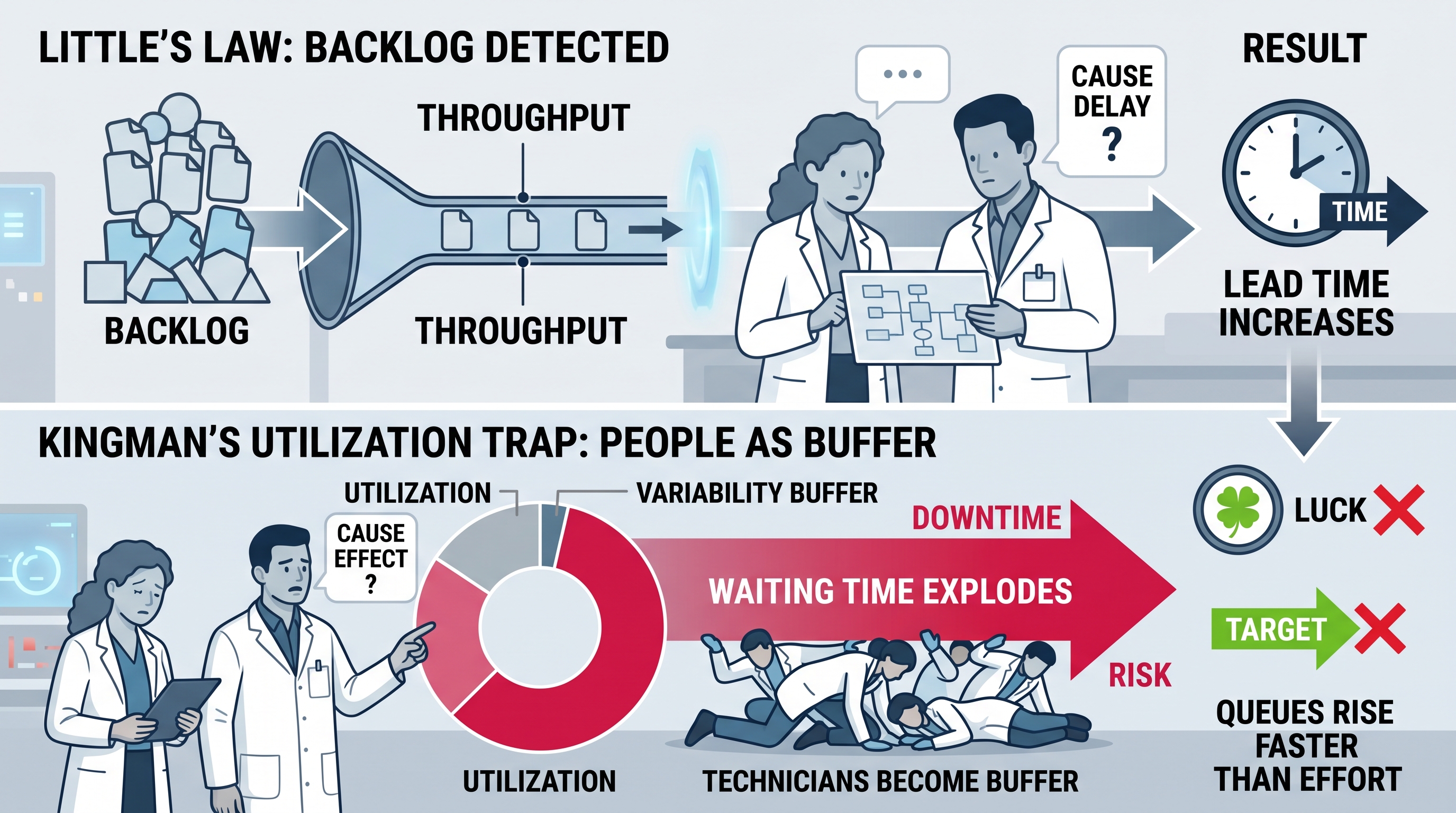
Very few teams know their real capacity, and that’s exactly where the damage compounds. Little’s Law quantifies the relationship between WIP and lead time. The Kingman Formula shows how variability makes waiting times explode. Parkinson’s Law explains why work expands to fill the time available, and the Student Syndrome explains why teams rush at the last minute regardless of the deadline set. Together, these models expose what overtime often hides: structural deficits that no number of extra hours can fix.
How q-alizer Replaces Overtime With Structure
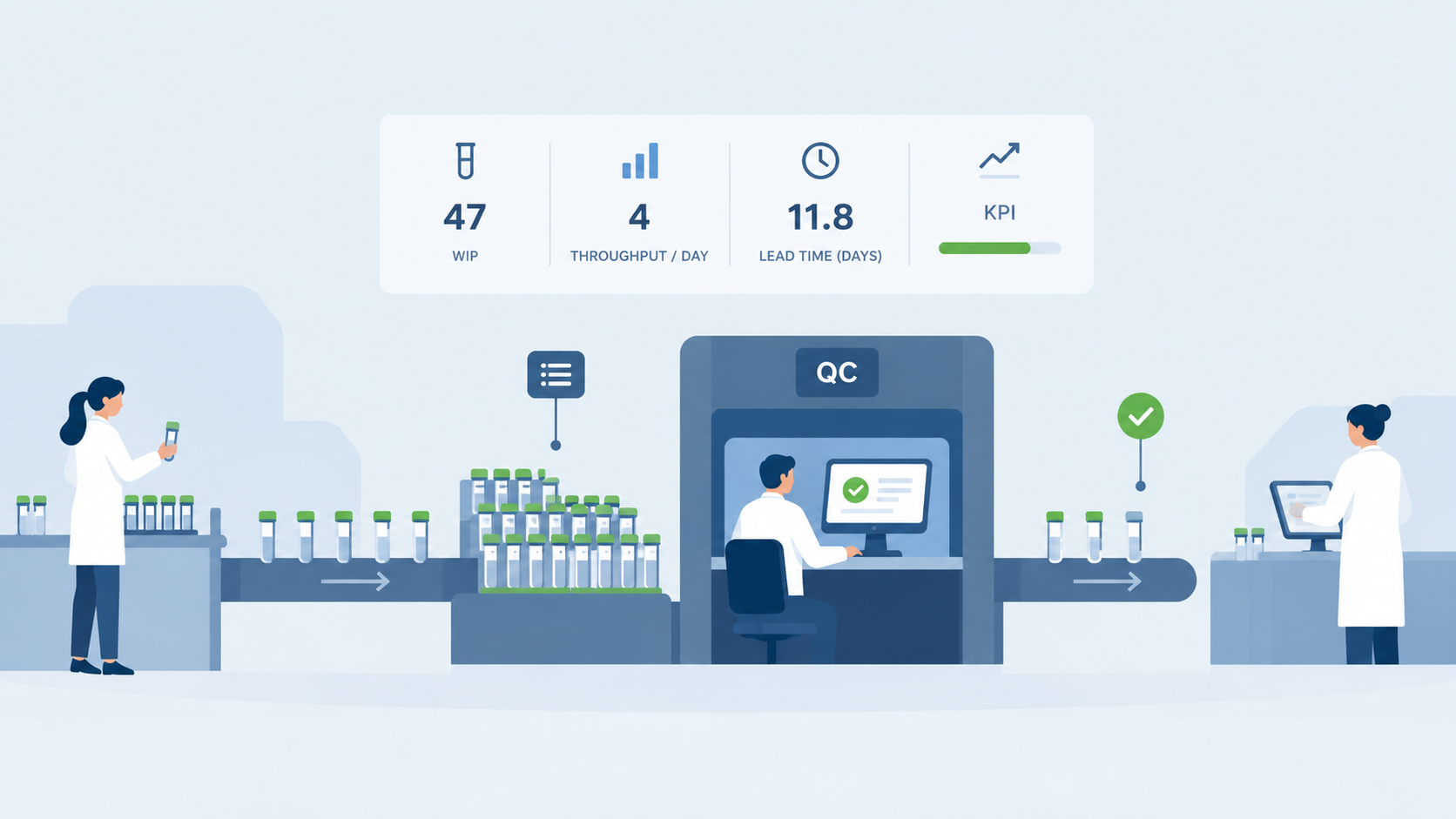
The fix doesn’t start with working-time models or culture programs. It starts with data flow, prioritization, and clarity. q-alizer enforces WIP limits instead of relying on overtime, so fewer parallel tasks mean shorter lead times, lower rework, and more depth of planning. Bottlenecks become visible before they trigger a late night, not after. Dashboards built on Little’s Law and the Kingman Formula show teams and capacity windows, bottlenecks per Hub such as CAPA, Deviation, Change, or Training, and forecasted lead times, so decisions run on data instead of intuition. Flow metrics replace time spent as the measure that matters: completed items, blockers, rework rates, and decision wait times show exactly where hours create value and where they’re just filled without impact. More structure means fewer reasons for overtime, not through moral appeals, but through a system that enforces flow.
Overtime is not a sign of commitment. It’s a sign of missing structure, and q-alizer is what makes that structure visible.