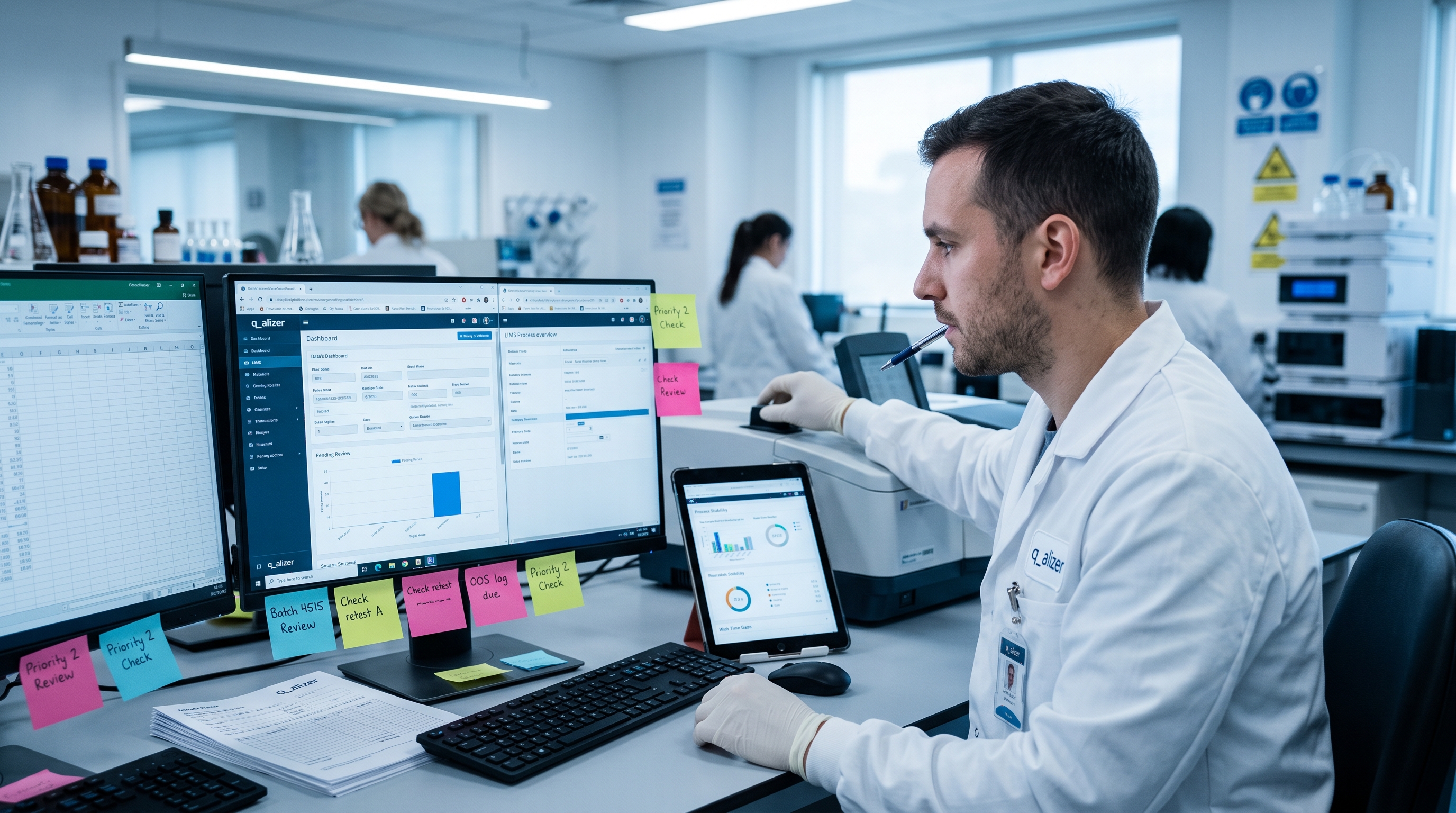
The technician at the bench at 19:00 looks committed. What nobody sees is the queue that puts her there, and the signal that rewards it.
Most labs measure what is easy to observe: who is there. Early arrival and late departure read as commitment. Leaving at 17:00 with your samples released reads as a question mark. For management this is convenient, because hours are visible at once and results need interpretation.
Nobody designed this on purpose. It grows wherever flow is invisible. If you cannot see how work moves, you look at the people instead.
Observers judge presence before they know anything about the work
Elsbach, Cable and Sherman studied this effect (Human Relations, 2010). Employees seen in the office outside normal hours were judged as dedicated. Those seen during normal hours were judged as reliable. Observers formed these views spontaneously, and they knew nothing about the work behind them.
The study measures perception, not performance. That is exactly the problem. Perception is what staffing decisions, promotions and team culture run on.
In a lab, late hours are a symptom, not a virtue
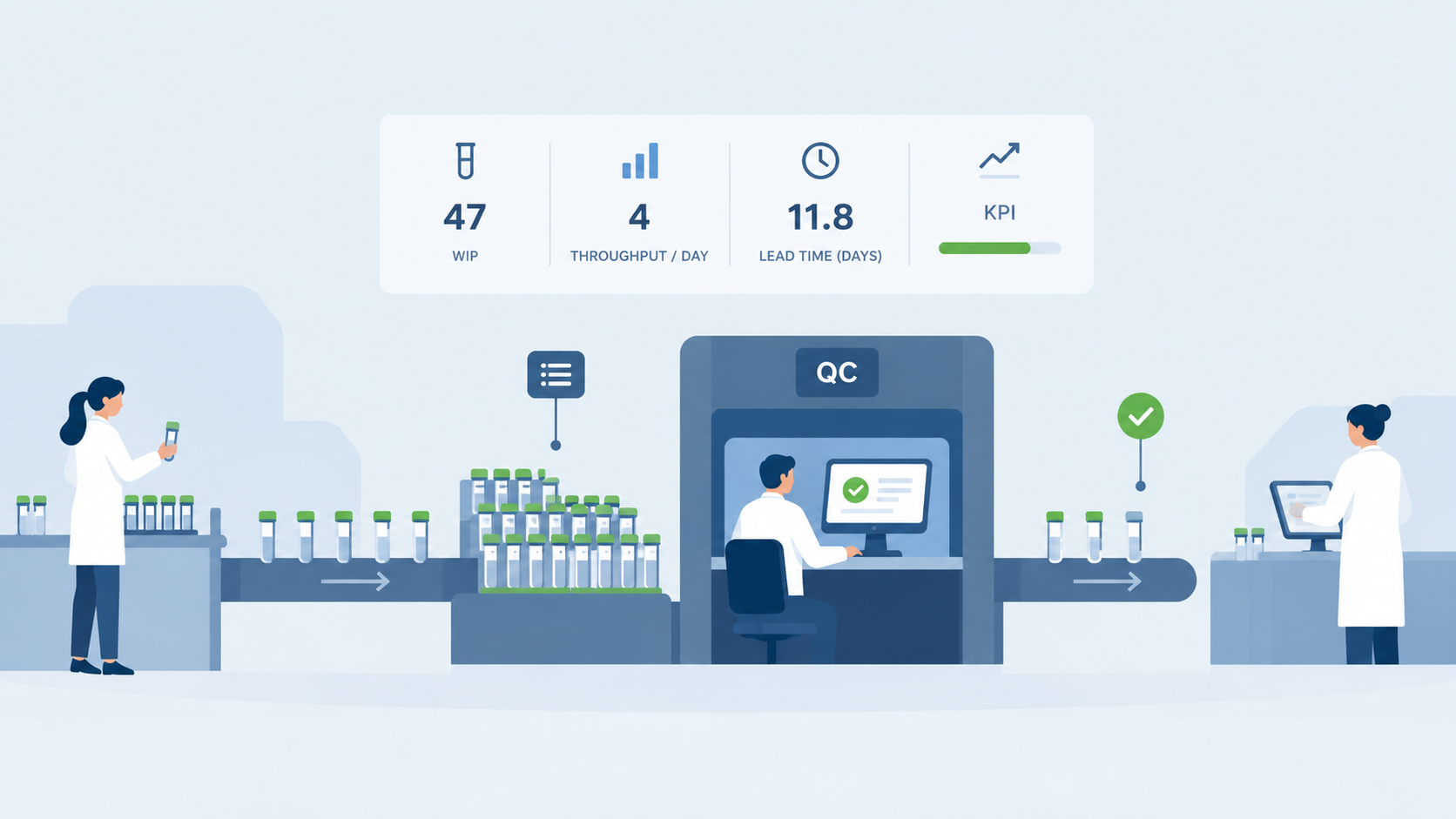
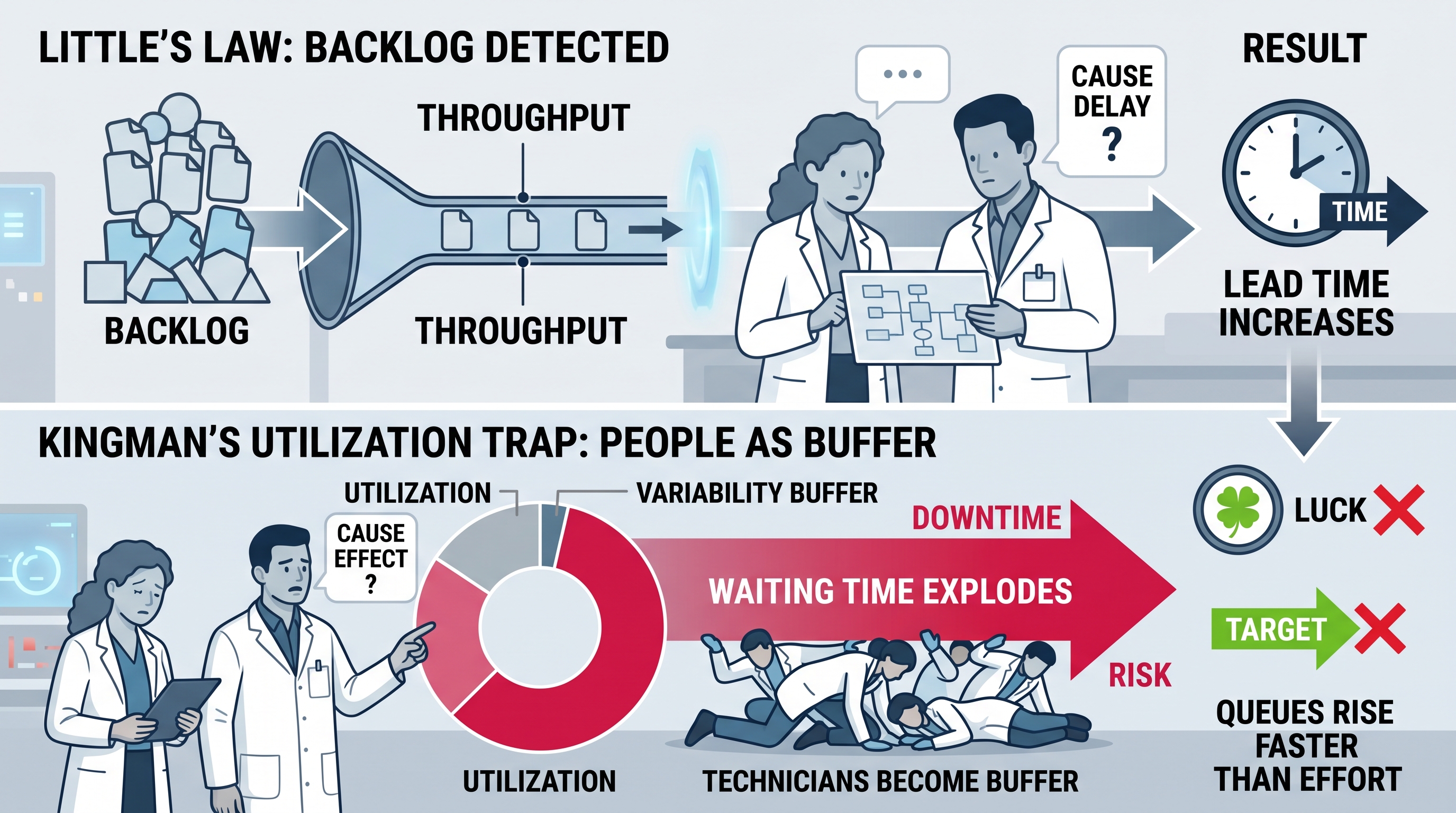
Take Little’s Law: Lead Time = Backlog ÷ Throughput. A lab with 47 open samples and a throughput of 3 per day has a lead time of about 16 days. Add four samples without raising output and it becomes 17 days. Nobody notices the shift. What everybody notices is the technician who stays until 19:00 to keep the number down.
Kingman’s formula explains the second half. The closer utilization gets to 100%, the faster waiting time grows, because variability has nowhere to go. In many labs the evening shift is that buffer. People become the buffer, and the system pays them in visibility.
The consequences are easy to recognize:
- Overtime becomes the visible proof of effort while the queue stays unmeasured
- Calm, stable teams look less committed than busy ones
- Leadership asks for more people instead of a different design
Praising results does not fix a system that hides them
The practical conclusion of the study is sound: ask what is done, not who is still there. But it is an appeal to individual managers. Appeals fade by the next audit.
A manager who wants to judge results needs results in front of them, every day, in the same form for everyone. Without that, presence returns as the substitute signal. Structure beats good intentions.
How q_alizer replaces presence with flow
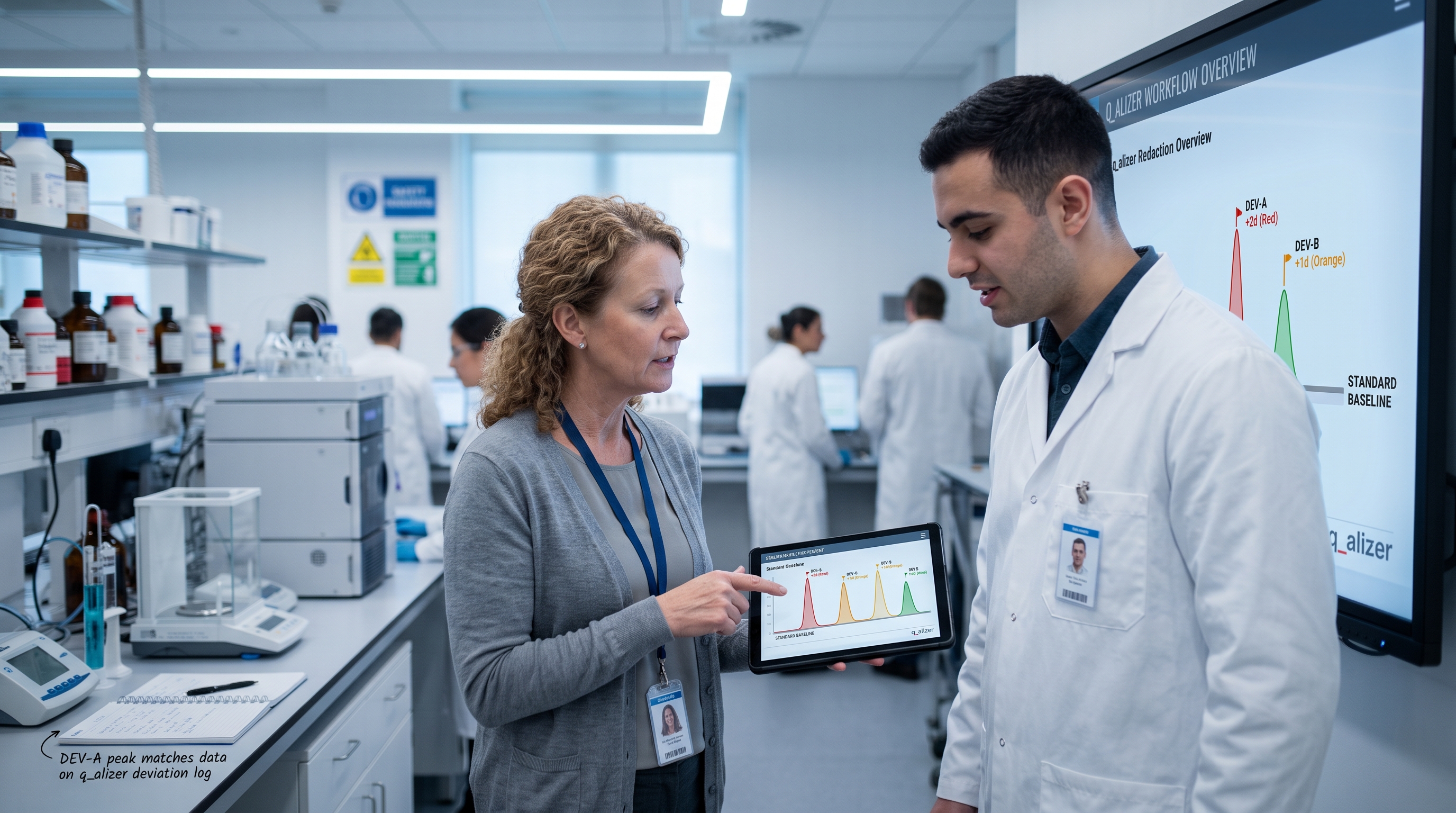
Cockpits show backlog, throughput and lead time per stage on one screen. A rising queue is visible on Tuesday, not discovered on Friday. Data Channels pull the status from the source systems, so nobody compiles it by hand. WIP-driven logic steers by what is in progress and what can be finished, not by due dates. Insight Agents flag trends such as a backlog that has grown three weeks in a row, before it turns into overtime.
The lab head and the technician read the same numbers. The technician who leaves at 17:00 with an empty queue shows up as what she is: a stable process.
When flow is visible, nobody needs to be visible.