
Flow · Quality · Decision Principles
A practical glossary of flow and decision principles used in QC and QA operations. These concepts explain why quality work slows down and how flow control restores predictability.
A United States FDA regulation that defines the requirements for electronic records and electronic signatures to be considered trustworthy, reliable, and equivalent to paper records. It covers areas such as audit trails, system access controls, and record retention.
The European Union's regulatory guidance for computerized systems used in GMP regulated activities, covering validation, data integrity, and audit trail requirements. It is the EU counterpart to 21 CFR Part 11 in the United States.
The state of having documentation, records, and evidence organized and available at any time, without requiring additional preparation before an audit. Continuous audit readiness replaces periodic, effortful audit preparation with an always current state.
A chronological, tamper evident record of who did what, when, within a system or process. A complete audit trail supports both regulatory compliance and internal root cause investigations.
The process of checking a completed batch record for accuracy, completeness, and compliance before a batch can be released. Batch record review is often one of the most time consuming manual steps in the release process when not connected to real-time data.
The state in which all release relevant activities across QC, QA, and Operations are complete or under control, with no unknown blocking items. Readiness is not a fixed point in time but a continuously evolving condition.
Any resource, activity, or dependency that limits the overall flow of work through the system. Bottlenecks are often dynamic and shift over time.
Time intentionally reserved within a schedule to absorb variability and unexpected delays without affecting the overall deadline. Insufficient buffer time is a common cause of last minute bottlenecks, particularly when combined with Student Syndrome.
A structured process for investigating the root cause of a quality issue and implementing actions to correct it and prevent recurrence. CAPA effectiveness depends on how quickly issues are identified and how well actions are tracked to closure.
The process of matching available resources, such as staff, equipment, and time, to expected demand. Capacity planning based on validated, real capacity produces more reliable schedules than planning based on theoretical or assumed capacity.
The formal process for evaluating, approving, and documenting changes to systems, processes, or procedures in a regulated environment. Poorly connected change control can create blind spots between what has changed and what still needs to be validated.
The ongoing tracking of quality and regulatory performance to identify risks and non-conformances as they emerge, rather than only during periodic reviews or audits. Continuous compliance monitoring shifts quality assurance from retrospective control to proactive oversight.
The documented process of ensuring a computerized system consistently performs as intended in a regulated environment. CSA (Computer Software Assurance) is a more risk based, streamlined approach to this process introduced by the FDA as an evolution of traditional CSV.
A consolidated, real-time view of quality relevant information across multiple sites and functions. Cross-site visibility replaces retrospective, site level reporting with a shared, comparable picture for management steering.
The total time it takes for a unit of work, such as a batch or a sample, to move from start to completion. Cycle time is directly affected by work in progress and by how much variability exists in the process.
The completeness, consistency, and accuracy of data throughout its lifecycle, from creation to review to storage. Digital workflows support data integrity by reducing manual data transfer and providing a consistent, auditable record of activity.
The capability to make informed, timely decisions based on shared, real-time context. It does not automate judgment, it supports experts by providing visibility, timing, and relevance.
The state in which the information needed to make a quality or release decision is available, current, and accessible to the person who needs to act on it. Decision readiness differs from data availability, it requires the right information to reach the right person at the right time.
The process of identifying, documenting, investigating, and resolving deviations from expected quality standards or procedures. Effective deviation management connects deviations to daily execution instead of tracking them in a separate, disconnected system.
The structured process of raising and resolving issues that cannot be handled at the level where they were identified, ensuring they reach the right person with the right urgency. Effective escalation management depends on shared visibility, without it, issues are often escalated too late or to the wrong person.
The continuous movement of work through a system with minimal waiting, interruption, or rework. In quality operations, flow reflects how samples, reviews, approvals, and decisions progress from initiation to release.
The practice of managing how much work enters and moves through the system at any given time. Flow control focuses on stabilizing work in progress rather than maximizing utilization.
A collective term for the good practice guidelines and regulations (such as GMP, GLP, GCP) that apply to regulated industries including pharmaceuticals, biotech, and medical devices. Software operating in a GxP environment must be evaluated for its impact on validated systems and data integrity.
The point at which responsibility for a task or piece of work transfers from one person, team, or system to another. Handovers are a common source of delay and lost information when the receiving party does not have immediate visibility into the status of incoming work.
Time during which work is neither being actively processed nor intentionally held as planned buffer, effectively wasted capacity within the process. Idle time differs from Buffer Time in that it is unplanned and typically indicates a gap in scheduling or coordination rather than a deliberate reserve.
The principle that quality assurance functions maintain a clear separation from operational execution, providing an unbiased check on quality and compliance. Independent oversight is strengthened when QA has direct, real-time visibility into operations without needing to request updates from execution teams.
The formal process of determining the root cause of a deviation, OOS result, or other quality event. The speed and quality of an investigation depends heavily on how much context and history is available at the point the investigation begins.
Metrics that describe system behavior. In flow-oriented environments, KPIs act as leading indicators, explaining why performance changes rather than only reporting outcomes.
A principle from queueing theory that explains how variability and work in progress amplify lead time. It shows that long delays are often caused by excess parallel work and inconsistent processing, not slow execution.
The total time between the start and the completion of a piece of work, from initiation to final result. Lead Time is directly linked to Work in Progress and Throughput through Little's Law, lead time equals WIP divided by throughput.
A fundamental relationship between work in progress, throughput, and lead time. Lead time equals work in progress divided by throughput. It explains why controlling work in progress is the most effective lever for reducing lead time.
A quality function that operates across more than one manufacturing or testing location, requiring coordination and comparable data across sites. Multi-site quality organizations depend on cross-site visibility to maintain consistent standards and identify risks that span locations.
Working on multiple tasks simultaneously. It increases perceived activity but reduces effective throughput, increases error risk, and lengthens lead times due to context switching.
Any instance where a product, process, or record does not meet a specified requirement. Non-conformances are typically tracked and resolved through the same deviation and CAPA processes used for other quality events.
A measure of how often tests are completed within their planned or committed timeframe. On-time testing performance is one of the clearest indicators of whether a lab's planning and workload are actually under control.
A test result that falls outside the predefined acceptance criteria for a product or process. OOS results trigger a formal investigation and can directly delay batch release if not resolved quickly.
A result that falls within specification but deviates from the expected historical pattern for a given test or process. OOT results can be an early indicator of an emerging quality issue before it becomes an OOS event.
A shared, real-time view of work, dependencies, and constraints across functions. It differs from reporting in that it reflects current conditions rather than historical outcomes.
A system or mechanism that provides context and situational awareness without executing transactions. It enables understanding and decision-making across existing systems.
The degree to which daily and weekly plans remain valid over time. High planning stability indicates controlled work in progress and aligned priorities. Low stability shows frequent replanning and ad hoc changes.
A formally designated individual, required under EU GMP, who is responsible for certifying that a batch has been manufactured and tested in compliance with regulatory requirements before release. The QP's certification is typically the final step before a batch can be released to market.
The synchronization of decisions across QC, QA, and Operations based on shared flow logic and readiness awareness. Orchestration aligns independent activities without centralizing control.
The portion of Lead Time during which work is waiting rather than being actively processed. High queue time relative to actual processing time is a common, often hidden driver of long lead times.
Any task, approval, or condition that directly affects batch release readiness. Making such dependencies visible early is essential for predictable release timelines.
A measure of how often a task, test, or process step is completed correctly on the first attempt, without rework or correction. Low right first time rates are a common hidden driver of extended lead times and increased workload.
A structured method for identifying the underlying cause of a problem, rather than only addressing its symptoms. In quality operations, root cause analysis is most effective when deviations and their context are visible in real time, not reconstructed after the fact.
The tendency to delay the start of work until deadlines approach, consuming buffer time and creating last minute bottlenecks. Often a symptom of overloaded systems rather than individual intent.
The authoritative source for a specific type of data within an organization, such as a LIMS for sample data or a QMS for quality events. Orchestration layers connect to systems of record without replacing their authority over the data they own.
The rate at which work is completed and exits the system. In quality operations, throughput reflects the organization's ability to deliver completed batches or release-ready outputs over time.
The time between when a sample or task enters a laboratory process and when the result or output is delivered. TAT is the laboratory specific term for the same underlying dynamic that Cycle Time describes at a broader process level.
A system that has undergone formal verification (such as IQ, OQ, PQ) to demonstrate it consistently performs as intended within a regulated environment. Orchestration layers that read from validated systems without altering them typically avoid triggering revalidation of those systems.
Natural fluctuation in task duration, demand, or workload. Variability is inherent in quality work and cannot be eliminated, only managed through flow control and decision synchronization.
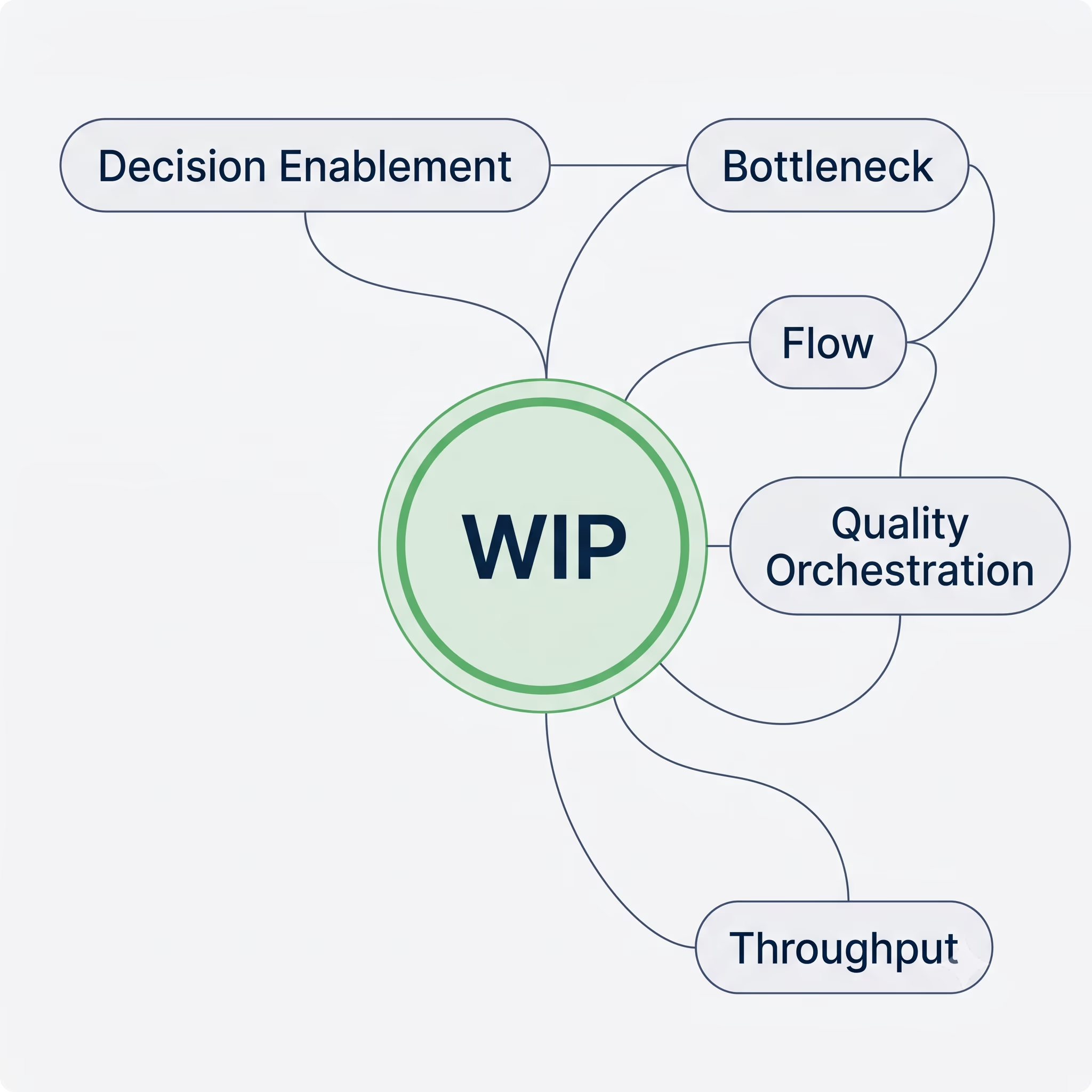
All work that has started but is not yet completed. Excessive work in progress increases waiting time, reduces focus, and destabilizes flow. Controlling it is central to predictable performance.
The practice of distributing tasks across available resources to avoid overload in some areas and idle capacity in others. Workload balancing requires real-time visibility into current load, without it, imbalances are typically only discovered after they have already caused delays.
Prefer to read first? Get the .