
Being busy is no longer enough
Most organizations still manage work as if effort equals performance: push harder when deadlines slip, raise utilization to meet demand, cover structural gaps with heroic effort. From the outside it looks productive. From the inside it feels fragile.
The pattern is predictable once you know what to look for: growing backlogs, unreliable delivery, constant firefighting, burnout dressed up as commitment. This is not a cultural failure. It is a system failure, and no amount of individual effort fixes a system that was never designed to flow.
The uncomfortable truth
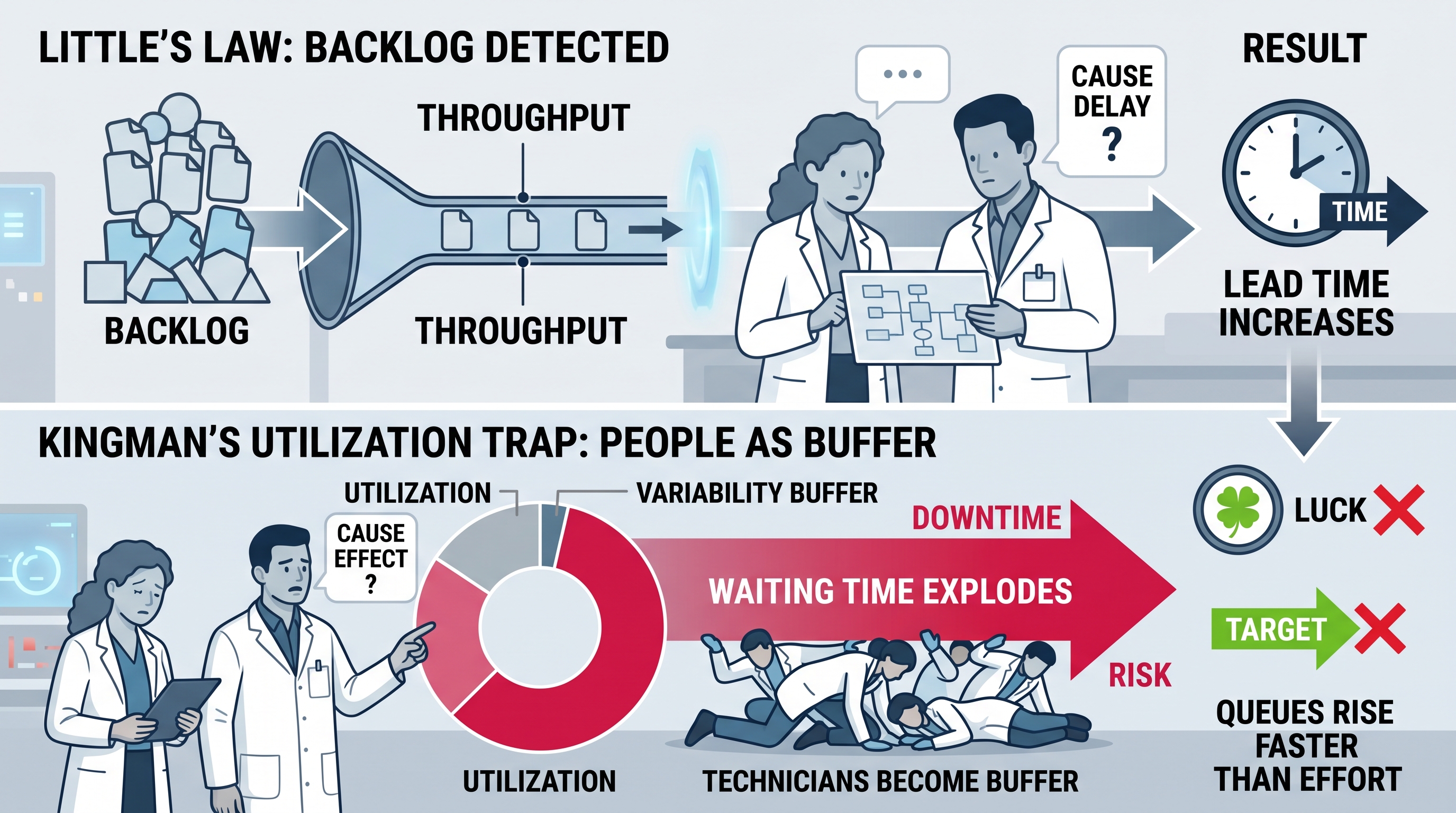
You don’t have a productivity problem. You have a physics problem. In complex systems, speed doesn’t come from pressure, it comes from flow. As utilization rises and variability increases, waiting time grows exponentially. That’s not opinion, it’s mathematics, encapsulated in Kingman’s formula. The harder you push, the slower you go. Not a metaphor. A property of the system.
From effort to flow
Traditional management optimizes for utilization, deadlines, individual efficiency, and heroic recovery. Flow-centric systems optimize for something different: stability under variability, throughput instead of busyness, predictable lead times, sustainable performance. The shift is uncomfortable at first, because it means watching a backlog grow on purpose and holding the line against every instinct to push harder. But backlog managed properly isn’t a failure signal, it’s a buffer. It absorbs demand variability instead of transferring it to people.
Why People Cannot Compensate for a Broken System
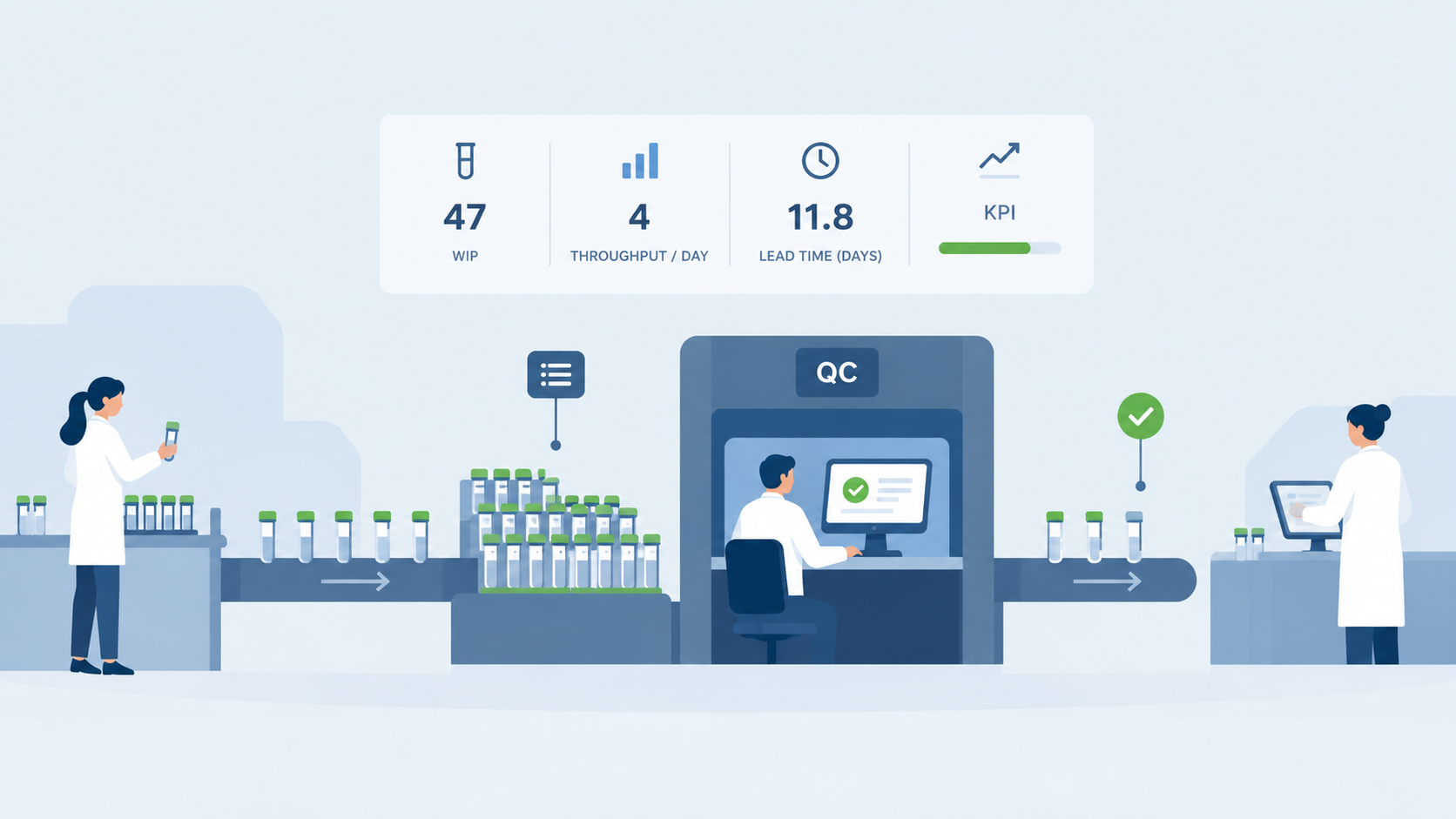
Little’s Law makes the mechanics explicit: lead time equals backlog divided by throughput. If backlog doubles while capacity stays fixed, lead time doubles with it. Adding pressure to people changes neither variable. Deadline-driven management creates the illusion of control, everything scheduled, everything due, while multitasking alone can cost up to 40% in lost productivity through context switching. When the system requires heroics to deliver, the system is broken, regardless of how heroic the people are.
What Leaders Do Differently
Flow-centric leaders protect throughput instead of accelerating work. They measure output consistency and lead time predictability instead of utilization percentages. They reduce overload before launching improvement initiatives, because improvement requires spare capacity to begin with. And they replace heroics with reliability, building capability into the structure of the work rather than into the endurance of the people doing it.
What Leaders Do Differently
Flow-centric leaders protect throughput instead of accelerating work. They measure output consistency and lead time predictability instead of utilization percentages. They reduce overload before launching improvement initiatives, because improvement requires spare capacity to begin with. And they replace heroics with reliability, building capability into the structure of the work rather than into the endurance of the people doing it.
How q_alizer Makes This Operational
q_alizer gives leaders the shared language and the data to act on it. Cockpits show backlog, WIP, and throughput in real time, so stability becomes something you can see and defend, not something you have to argue for in a meeting. Data Channels connect the systems already in place instead of adding another spreadsheet to track. Insight Agents flag where variability is building before it turns into a missed deadline, so leaders can intervene at the point of leverage instead of the point of pressure. This is what makes backlog manageable as a buffer rather than something to panic over: visibility into where work actually sits, not just when it’s due.
The question is not whether your people work hard enough. It’s whether you want a system that works, or one that only works because they compensate for it.
Download the Flow Centric Operating System. Understand why pushing harder fails, and what to do instead.
download Download Whitepaper (PDF)