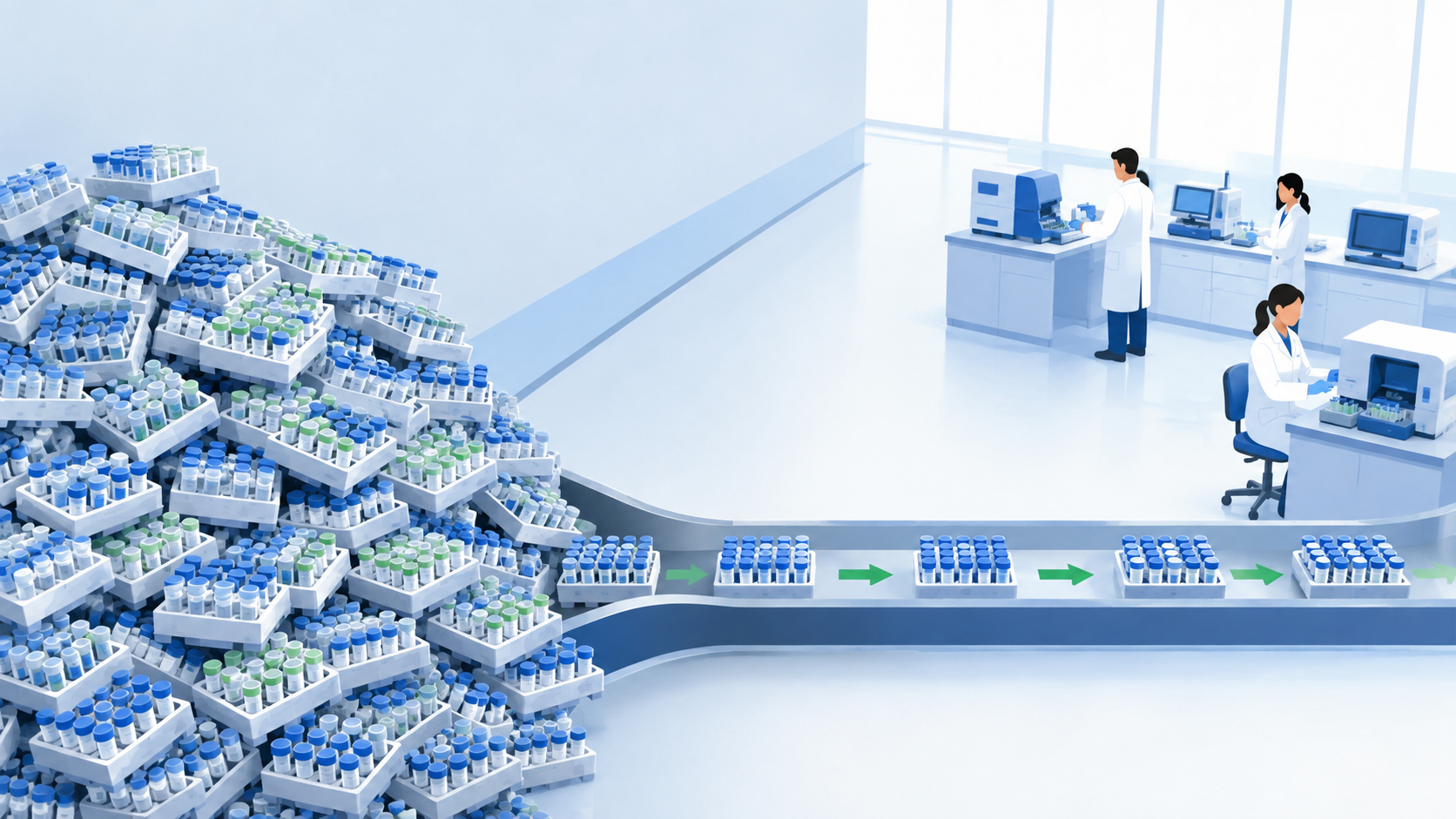

Quality is supposed to flow. Instead, in many QC and QA teams, it gets stuck in outrage. Not because data is missing, but because emotion fills the gap where evidence should be.
Turning Emotions into Evidence
Quality is supposed to flow. Instead, in many QC and QA teams, it gets stuck in outrage. Not because data is missing, but because emotion fills the gap where evidence should be.
In pharma, quality doesn’t wait, it’s supposed to flow. Yet in many QC and QA teams, that flow gets blocked not by lack of data, but by noise. A simple process improvement turns into endless debate, cross-functional task forces, and departmental standoffs. Progress stalls, timelines slip, and quality becomes synonymous with delay instead of assurance.
It rarely starts with bad intent. Most disruptions happen at the interfaces, where QA, QC, and Operations act on good motives but different clocks. Compliance speaks in evidence, Operations speaks in output, QC speaks in data. Without synchronization, even the right data turns into friction. A deviation gets recorded days after it occurred, and by the time it’s logged, context has faded and the investigation becomes guesswork. Once it’s opened, QC writes the report, QA sends comments, QC revises and resubmits, round after round, adding delay without adding insight. Every request becomes “urgent” until no one trusts the plan anymore.
The Root Cause: When Bias Masquerades as Diligence
In regulated environments, resistance rarely calls itself resistance. It hides behind words like compliance, risk awareness, or regulatory diligence. Quality systems slow down not from lack of control, but from overcontrol, and behind that overcontrol sit predictable human patterns. They’re invisible in meetings, but perfectly visible in the data once you know where to look.
Teams debate the easiest topics first, SOP wording, field names, column order, while the harder decisions wait. Low-severity events sit in “Pending QA Approval” for weeks because perceived risk runs higher than actual risk. Tickets stay open and untouched because no one wants to change a validated process. And as closure nears, ownership quietly shifts from analyst to reviewer to committee. Individually, each pattern looks like caution. Together, they build a culture where “QA prevents” and “QC delays” become reflexes instead of strategies. The system starts confusing noise with control, and rigor with rigidity.
From Outrage to Flow
Flow doesn’t mean skipping validation or cutting corners. It means connecting data, timing, and accountability into one synchronized motion. Before every escalation, three questions should come first: What measurable effect? On which objective? Within what timeframe? No data, no debate. Under 1% impact or a learning curve of a week or less counts as acceptable variance. The focus shifts from perception to proof, backed by a simple discipline: define the hypothesis, identify the metric, run a two-week test on real data, and let the owner decide in two sentences. Untouched for 30 days means accepted. Objections need reproducible counter-data, not opinion.
How q_alizer Turns Emotion into Evidence
q_alizer doesn’t measure emotion, but it captures its signature in flow: decision loops, latency, aging WIP, ownership hops. Inside the Flow Module of each Hub, whether the Operational Hub or the Management Hub, every delay or variability spike shows up as a Flow Signal, shared transparently between Operations, QA, and QC in real time. Connected to systems like TrackWise, LIMS, and eQMS, q_alizer contextualizes operational data into deviation trends, WIP heat maps, and predictive indicators for flow interruptions. Every Hub runs on the same connected data foundation, so accountability stays shared instead of scattered across committees.
When fact replaces friction, quality accelerates without losing control.
Want to see decisions driven by data instead of noise? Get the guideline on Data-Driven Lab Management.