
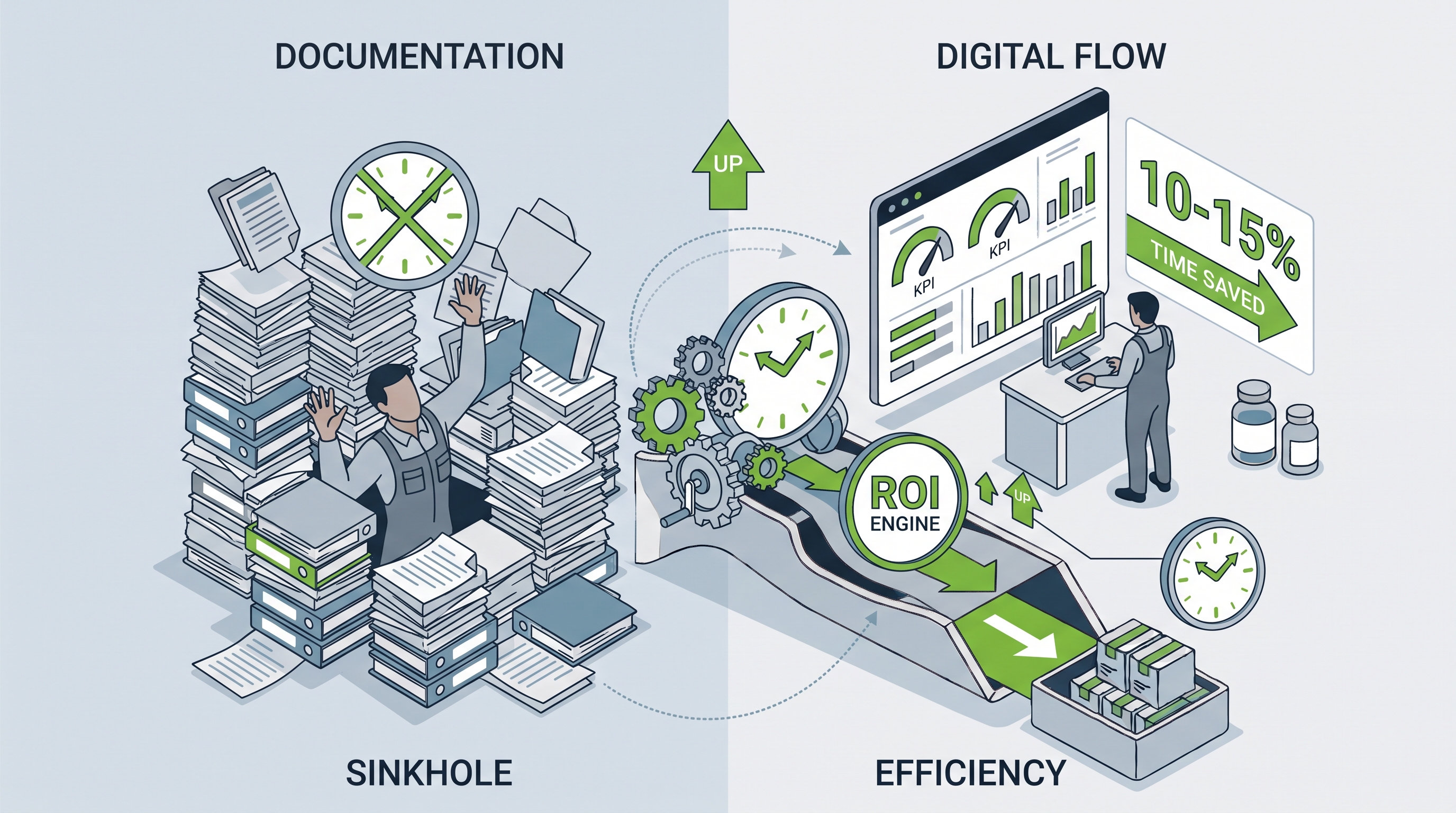
QA and QC teams in pharma face growing pressure from documentation load, disconnected systems, and strict GxP requirements, while batch delays can cost significant revenue every day. This business case outlines the typical challenges, the expected benefits, and what to plan for when digitalizing QC and QA operations.
Where the pressure comes from
Pharma QA and QC teams commonly face five recurring pressures: heavy documentation load that can consume up to a third of working time, disconnected systems such as LIMS, ERP, and Excel that slow decisions and introduce errors, batch delays that carry a direct cost for critical drugs, strict GxP requirements that demand detailed, auditable records, and increasingly complex products such as biologics that add further load to already stretched teams.
What digitalization typically delivers
Across comparable deployments, digitalization efforts in this space typically reduce documentation time and boost overall productivity by around 10 to 15 percent, while accelerating batch release by roughly two days. Faster release combined with fewer manual steps also tends to increase overall batch throughput, with payback on the initial investment commonly reached within three to six months.
What to plan for before rollout
The most common obstacles are not technical but organizational: resistance to moving away from familiar spreadsheets, tools that are too generic for pharma specific workflows, weak integration with existing ERP or MES systems, and features that are too complex for daily use. Addressing these upfront, through phased rollout, clear training, and simple, focused design, is what determines whether the expected benefits actually materialize.
Want to put this into practice? Get the guideline on Data-Driven Lab Management.