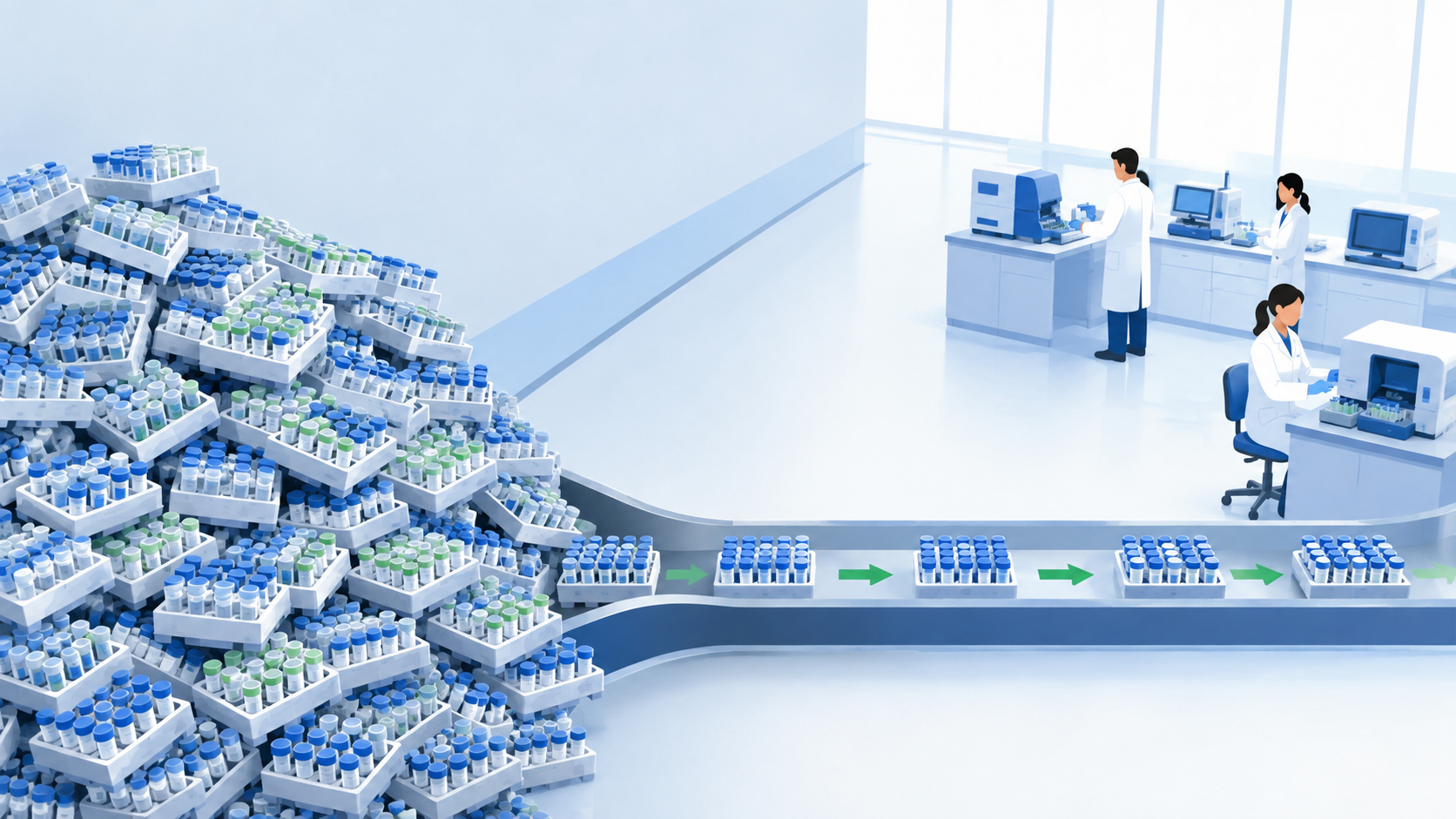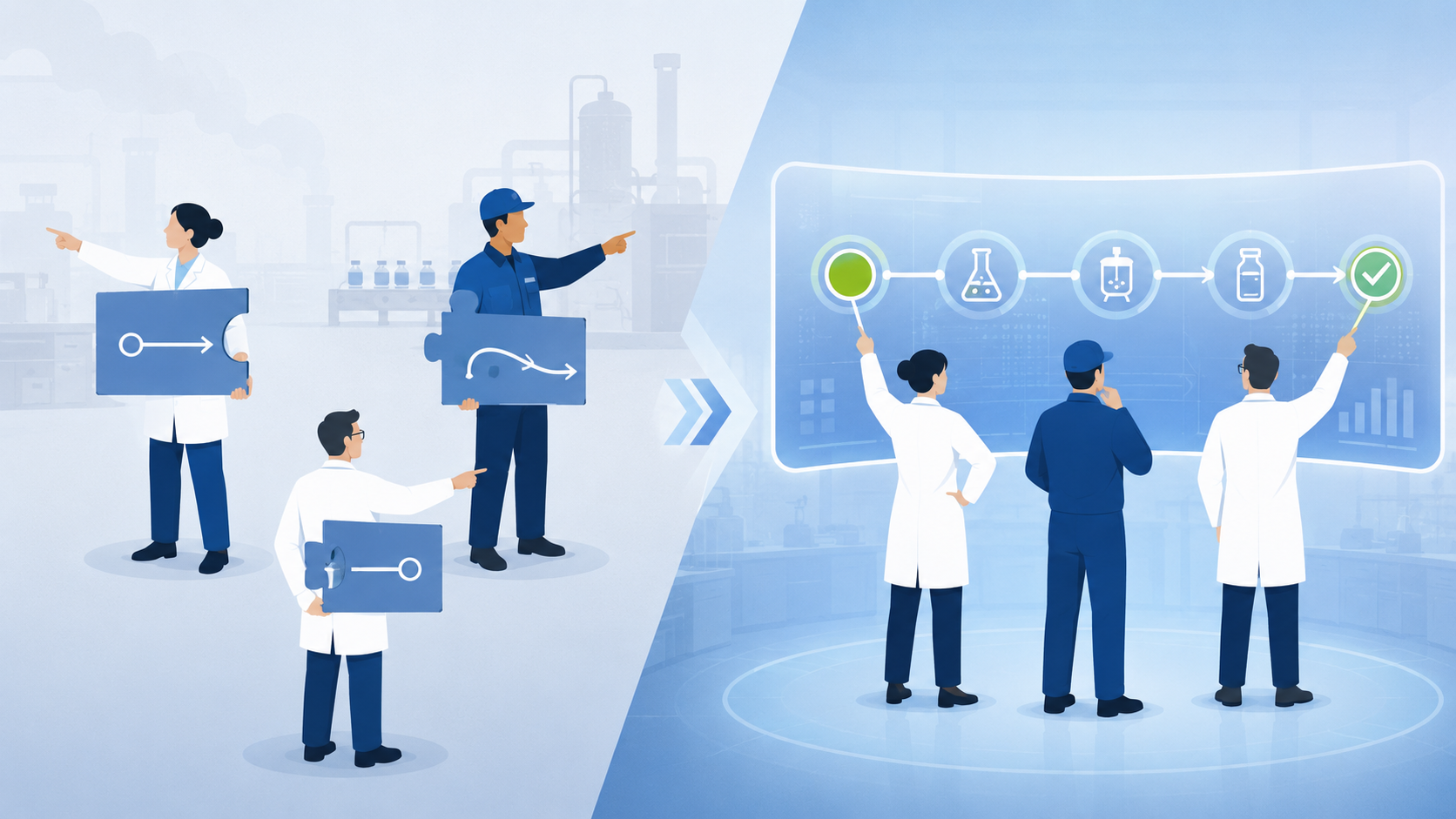
Most QC and QA labs do not have a technology problem, they have a flow problem. When information, work, and decisions stop moving through the lab, systems slow down, buffers grow, and teams start managing symptoms instead of the system itself. This guideline lays out five foundational principles and a practical six-step roadmap to build lab maturity, one stage at a time.
Five principles behind lab performance
Five established principles explain most of what drives lead time and throughput in a lab: Kingman’s Formula shows how variability and work in progress stretch lead times beyond what raw capacity would suggest. Parkinson’s Law shows how work expands to fill the time available when deadlines stay vague. Little’s Law connects work in progress, throughput, and lead time in one exact relationship. Student Syndrome shows how starting work close to the deadline eats into buffer time. Multitasking shows how switching between tasks increases error risk and slows everything down. Together, these five principles describe the same underlying truth, flow is the system’s vital sign.
A six-step roadmap to operational excellence
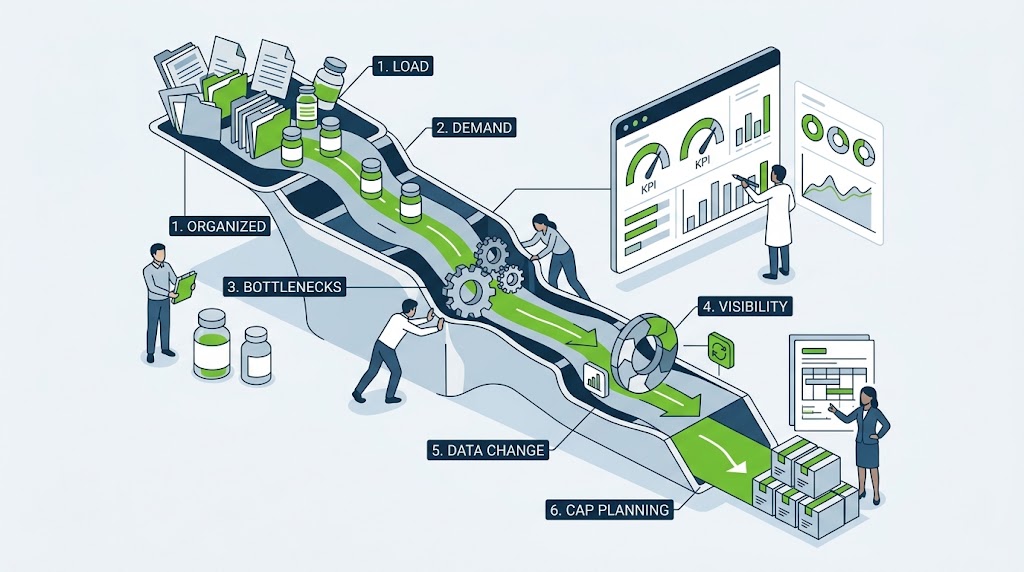
The guideline breaks the path to data-driven lab management into six stages, each one modular enough to start wherever the current challenge is greatest: knowing your load, decoding demand, revealing bottlenecks, making performance visible across teams, driving change based on what the data shows, and planning smarter using real, validated capacity instead of gut feeling.
Where does your lab stand today?
The guideline closes with a short self-assessment across all six steps, rated from no visibility to fully integrated, proactive planning. The goal is not a higher score for its own sake, it is shortening the time between seeing a problem and actually improving it.
Want to put this into practice? Get the guideline on Data-Driven Lab Management.