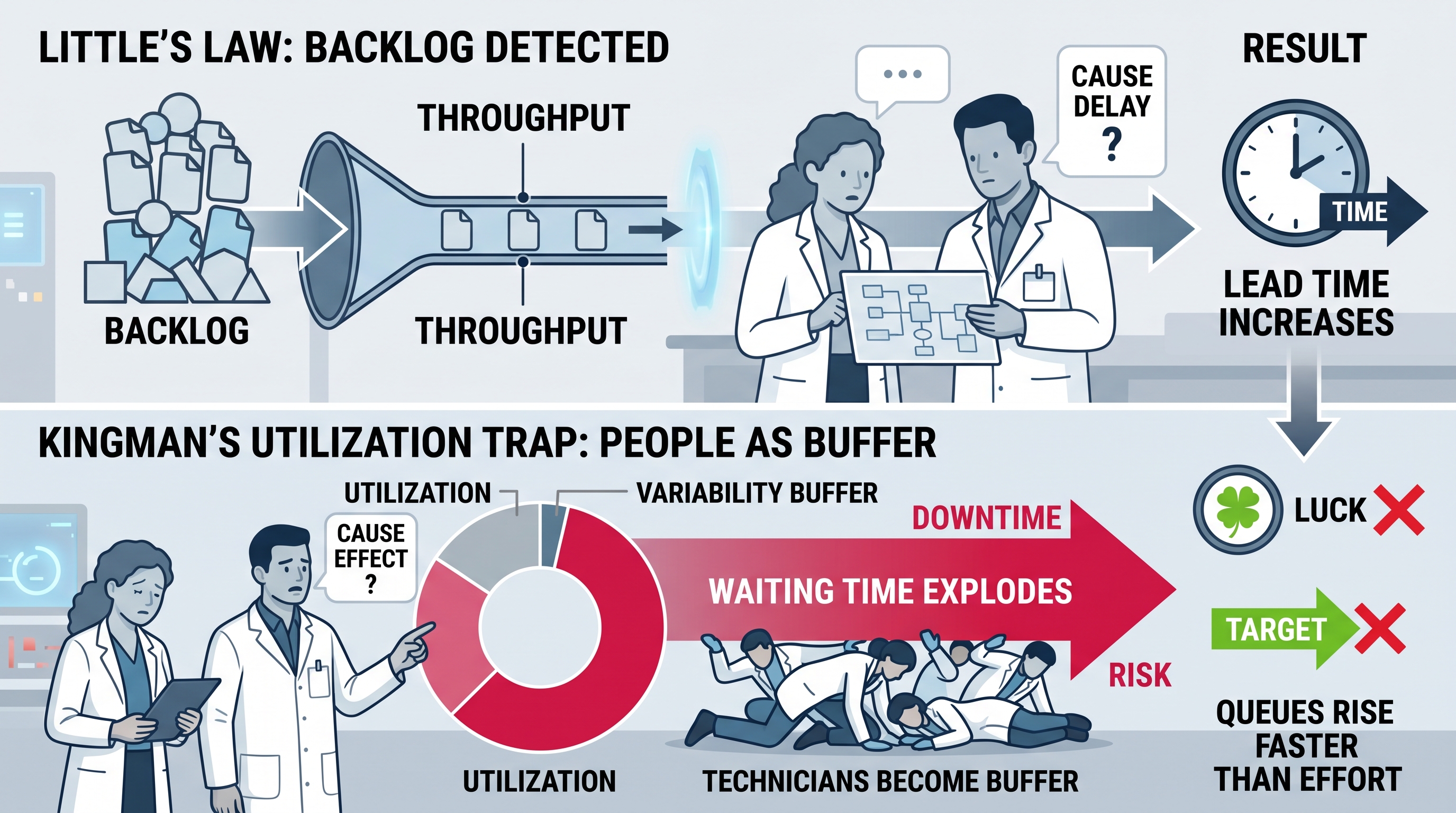

Lab data sits fragmented across LIMS, ERP, and Excel, creating transparency gaps and coordination overhead that nobody accounts for on a org chart. Each day a batch release is delayed can cost millions and, in the worst case, affect patient care. GxP guidelines demand precise documentation and traceability, and biologics and advanced therapies only raise that bar further. None of this is new information to anyone running a QC or QA operation. What’s missing is usually not awareness, it’s a system that closes the gap between the work and the record of the work.
What Modern Digital Solutions Actually Change
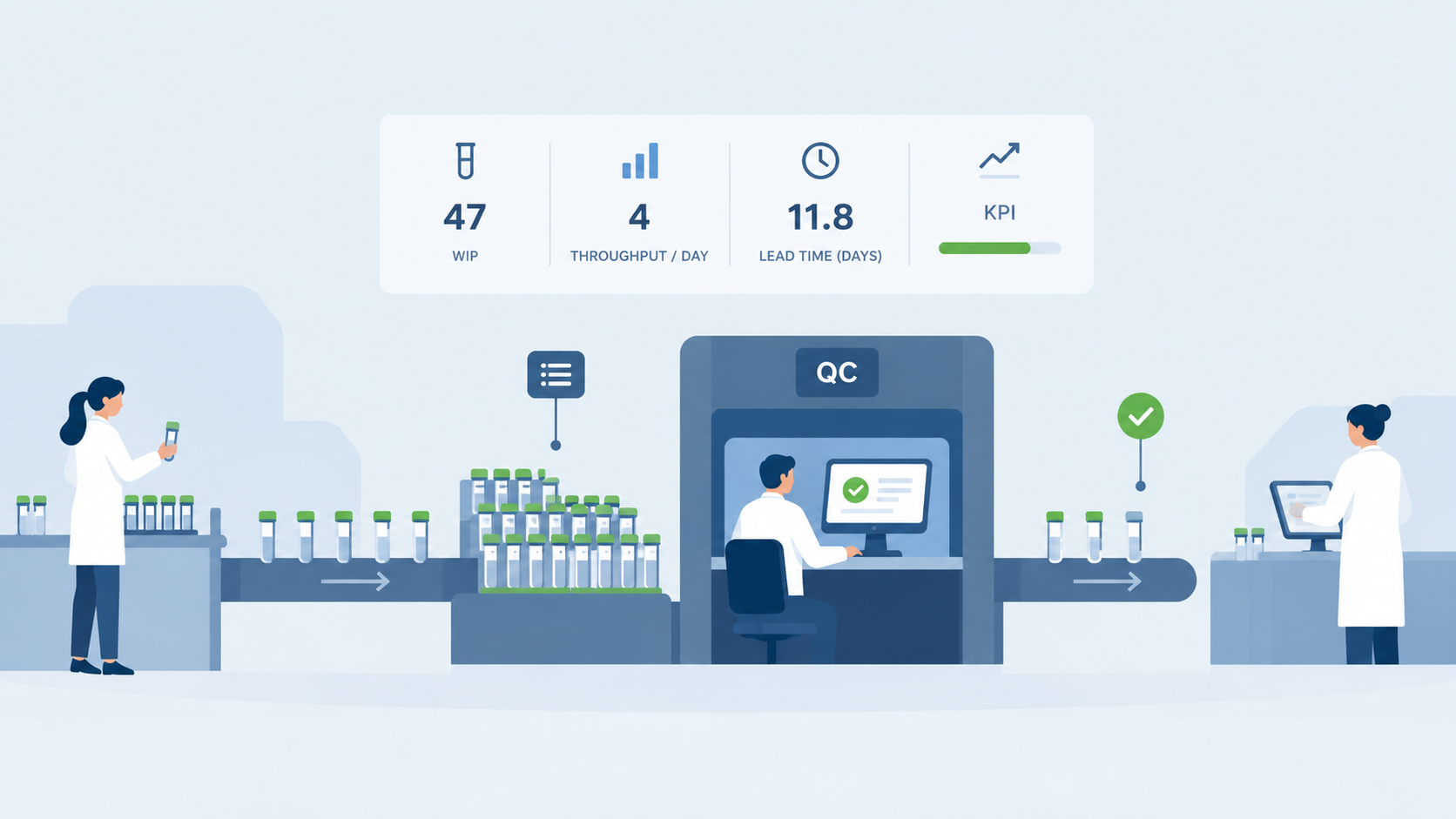
Real-time dashboards make task progress and bottlenecks visible instead of discoverable after the fact. Automated scheduling handles resource planning and batch simulation without someone rebuilding a spreadsheet every Monday. System integration breaks down the data silos between LIMS, ERP, and manual workarounds, and AI-powered recommendations flag where efficiency or reliability can improve. Put together, these give QA and QC a shared environment where roles and targets are defined and measurable, not just assumed.
The Numbers
The gains are quantifiable, not aspirational:
- Up to 15% reduction in documentation time
- Comparable gains in planning and task execution
- Batch release typically shortened by 2 days
- For 3,000 batches a year, over €800,000 in savings from better resource allocation
- ROI typically achieved within 3 to 6 months
Why Implementation Still Stalls
The obstacles are rarely technical. Resistance to leaving paper-based or legacy systems runs deep, integration with existing ERP or MES infrastructure takes real planning, and without a clear business case, internal approval never gets off the ground. The organizations that succeed treat this as a business decision backed by numbers, not a technology upgrade sold on enthusiasm.
What Actually Drives Adoption
User-friendly interfaces determine whether people actually use the system day to day. Flexible APIs make integration realistic instead of theoretical. Domain-specific functionality, built for QC and QA rather than adapted from generic workflow software, keeps the system relevant to the actual work. Fast implementation matters too: teams need a quick win to build the internal buy-in that carries the rest of the rollout.
The shift underway is from reactive, documentation-heavy QA to proactive, data-driven quality, and the organizations that make that shift first will set the pace for everyone else.